

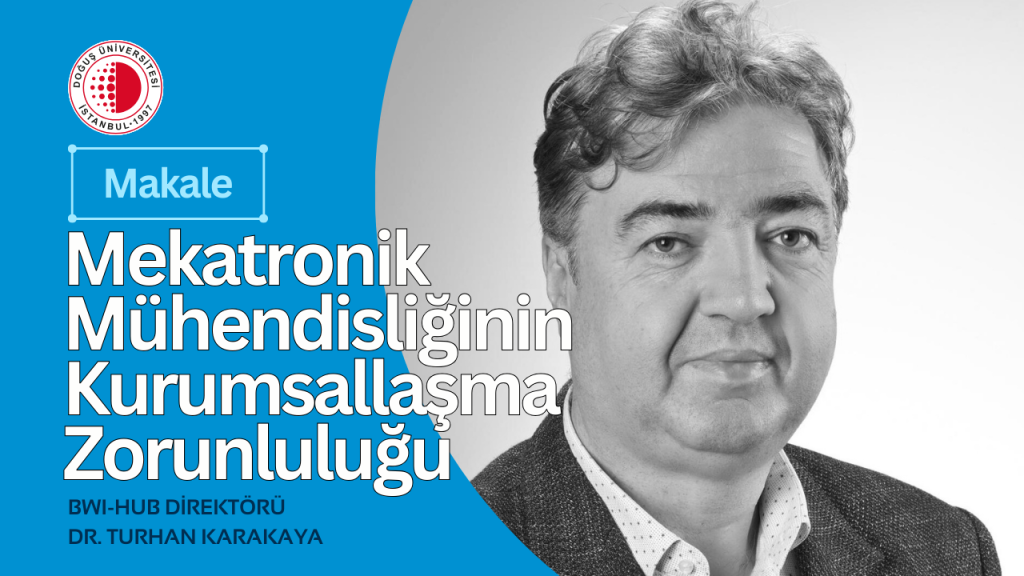
Doğuş Üniversitesi İş Dünyası ve İnovasyon Merkezi (BWI-Hub) Direktörü Dr. Öğr. Üyesi Turhan KARAKAYA, Mekatronik Mühendisleri Odası’nın kurulması hakkındaki görüşlerini şu şekilde dile getirmiştir:
Türkiye’de Mekatronik Mühendisliği Disiplininin Kurumsallaşma Zorunluluğu: Küresel Perspektifler, Teknik Gerekçeler ve Sürdürülebilir Bir Yol Haritası Önerisi
Türk mühendislik camiasının tarihsel süreçteki en önemli kazanımlarından biri, mesleki örgütlenmenin güçlü ve köklü bir çatı altında, Türk Mühendis ve Mimar Odaları Birliği (TMMOB) bünyesinde kurumsallaşmış olmasıdır. Bu çatı altındaki odalar, meslek etiğinin korunması, kamu yararının gözetilmesi ve mesleki standartların yükseltilmesi gibi hayati işlevleri onlarca yıldır büyük bir sorumluluk bilinciyle yerine getirmektedir. Bu bağlamda Makina Mühendisleri Odası (MMO), sanayimizin altyapısını inşa eden makina mühendisliği disiplininin gelişiminde oynadığı kritik rolle, ülke kalkınmasına yaptığı somut katkılarla ve meslektaşlarının haklarını korumadaki kararlı duruşuyla takdir edilmektedir. MMO’nun standart belirleme, eğitim, denetim ve toplumsal aydınlanma alanlarındaki çabaları, Türk mühendisliğinin ortak hafızasına kazınmış değerli bir mirastır. Bu miras, mekatronik mühendisliğinin geleceğine dair yürütülecek her türlü yapıcı tartışmanın da temel referans noktasını ve güvenilir zeminini teşkil etmektedir. Bu noktadan hareketle, amacın mevcut değerli yapıları tahrip etmek değil, teknolojik dönüşümün gerektirdiği yeni ihtiyaçlara cevap verebilmek adına bu yapıları güçlendirmek ve tamamlamak olduğu açıkça vurgulanmalıdır.
Teknolojik evrim, mühendislik pratiğinin doğasını ve disiplinler arasındaki geleneksel sınırları kökten dönüştürmektedir. Mekatronik kavramı, bu dönüşümün merkezinde yer alan ve makina mühendisliği, elektronik mühendisliği, kontrol mühendisliği ve bilgisayar bilimlerinin eşzamanlı ve sinerjik bir entegrasyonunu zorunlu kılan bir paradigmayı temsil etmektedir. Günümüzde ileri üretim sistemleri, otonom araçlar, robotik cerrahi cihazlar ve akıllı altyapılar gibi karmaşık sistemlerin başarılı bir şekilde tasarımı ve işletimi, artık bu disiplinlerden herhangi birinin tek başına sahip olduğu bilgi birikimi ile mümkün değildir. Aksine, sistemin mekanik konfigürasyonu, sensör ve aktüatör seçimi, veri işleme algoritmaları ve gerçek zamanlı kontrol stratejileri, tasarım sürecinin en başından itibaren bir bütün olarak ele alınmak zorundadır. Türkiye, bu küresel gerçekliğin farkına vararak eğitim politikalarında erken bir adaptasyon sergilemiş ve altmışın üzerinde üniversitesinde Mekatronik Mühendisliği lisans programlarını hayata geçirmiştir. Bu programlardan yıllık ortalama üç bin civarında yeni mezun verilmekte ve toplam mezun sayısının kırk bin eşiğine yaklaştığı tahmin edilmektedir. Bu geniş ve nitelikli insan kaynağı, ülkenin katma değerli üretim ve teknolojik bağımsızlık hedefleri açısından stratejik bir öneme sahiptir. Ancak, bu mühendislerin mesleki örgütlenme noktasında karşılaştıkları durum, sahip oldukları potansiyel ile uyumsuz bir tablo çizmektedir. Mevcut mevzuat çerçevesinde, mezunların büyük çoğunluğu uzmanlık alanlarını tam olarak yansıtmayan bir şekilde, TMMOB Makina Mühendisleri Odası’na kayıt yaptırmak zorunda kalmaktadır. Bu durum, basit bir idari sınıflandırma meselesinin ötesine geçerek, mesleki kimlik, teknik yetkinliğin tanınması, yasal sorumluluk alanlarının belirlenmesi ve uluslararası rekabet edebilirlik gibi derin sorunlar yaratmaktadır.
Bu sorunların evrensel bir bağlamda değerlendirilmesi, Türkiye için en uygun modelin geliştirilmesine ışık tutacaktır. Gelişmiş endüstriyel ekonomiler, mekatroniğin önemini kavrayarak onu mesleki yapılanmalarına çeşitli biçimlerde entegre etmişlerdir. Almanya örneğinde, “Mechatroniker” mesleği federal düzeyde resmen tanınmış, eğitim ve sertifikasyon standartları belirlenmiş ve bu standartlar Alman sanayisinin kalite kültürünün ayrılmaz bir parçası haline gelmiştir. Mühendislik düzeyinde ise, VDI (Alman Mühendisler Birliği) gibi kuruluşlar, mesleki gelişimin yanı sıra binlerce teknik standardın oluşturulmasında da aktif rol oynamakta, böylece mesleki pratik ile endüstriyel normlar arasında güçlü bir bağ kurulmaktadır. Avustralya ve Yeni Zelanda’da benimsenen model ise yetkinlik temelli bir lisanslama sistemine dayanmaktadır. “Chartered Professional Engineer” statüsü, mezuniyet sonrası kazanılan deneyim, karmaşık mühendislik problemlerini çözme becerisinin kanıtlanması ve sürekli mesleki gelişim faaliyetlerini gerektirmektedir. Mekatronik, bu sistem içinde güçlü bir uzmanlık alanı olarak tanınmakta ve söz konusu statü, özellikle kamu güvenliğini ilgilendiren projelerde yasal imza yetkisinin temel dayanağını oluşturmaktadır. Bu yaklaşım, formel eğitimin ötesinde, kanıta dayalı bir yetkinlik değerlendirmesini merkeze almaktadır. Birleşik Krallık’taki uygulama ise köklü mühendislik kurumları bünyesinde uzmanlık kollarının nasıl işlevsel hale getirilebileceğine dair bir örnek sunmaktadır. Institution of Mechanical Engineers (IMechE) bünyesindeki “Mechatronics, Informatics and Control Group”, ana disiplin çatısı altında spesifik bir uzmanlık alanının nasıl örgütlenebileceğini ve geliştirilebileceğini göstermektedir. Buna karşılık, Amerika Birleşik Devletleri’ndeki model dikkatle incelenmelidir. ABD’de “Professional Engineer” lisansı genellikle geleneksel mühendislik dalları için verilmekte, mekatronik ise çoğunlukla lisansüstü bir uzmanlık alanı olarak kalmaktadır. Bu yapı, entegre bir sistemin farklı bileşenleri için farklı disiplinlerden mühendislerin imza yetkisi kullanmasına, ancak sistemin bütünsel entegrasyonu ve güvenliğinden sorumlu tek bir mesleki otoritenin bulunmamasına yol açabilmektedir. Bu tür bir “sorumluluk dağınıklığı”, yüksek risk taşıyan kritik sistemler için potansiyel bir güvenlik açığı oluşturmaktadır.
Türkiye’nin mevcut durumu, henüz ABD’deki kadar belirgin bir parçalanma göstermese de, benzer riskleri içinde barındırmaktadır. Makina Mühendisleri Odası’nın mekanik sistemler konusundaki ve Elektrik Mühendisleri Odası’nın elektrik-elektronik sistemler konusundaki derin uzmanlıkları tartışılmazdır. Ancak, bir otomasyon hattının, robotik bir sistemin veya bir siber-fiziksel sistemin güvenliği ve verimliliği, salt mekanik veya salt elektriksel tasarımın doğruluğu ile değil, bu bileşenlerin yazılım ve kontrol algoritmaları ile olan kusursuz bütünleşmesi ile sağlanır. İşte bu noktada, sistemin bütünsel davranışından, performansından ve güvenliğinden mesleki ve hukuki sorumluluğu üstlenecek, bu üçlü yetkinliği (mekanik, elektronik, yazılım/kontrol) bünyesinde barındıran bir mesleki kuruma duyulan ihtiyaç kaçınılmazdır. Bağımsız bir Mekatronik Mühendisleri Odası’nın kurulması, bu kritik boşluğu dolduracak, MMO ve EMO’nun değerli uzmanlık alanlarını tamamlayıcı nitelikte bir “sistem entegrasyonu ve bütünleşik denetim” yetkisini merkezileştirecektir. Bu yaklaşım, mevcut odaların yükünü hafifletmekle kalmayacak, onların kendi temel disiplinlerindeki çalışmalarını daha da derinleştirmelerine de olanak tanıyacak, sinerjik bir iş bölümü ve iş birliği modeli yaratacaktır.
Bağımsız bir oda kurmanın getireceği faydalar çok boyutludur. İlk olarak, “Mekatronik Mühendisi” mesleğinin görev, yetki ve sorumluluklarının yasal olarak tanımlanması, mesleki kimlik erozyonunu sona erdirecek ve hem ulusal hem de uluslararası düzeyde net bir tanınırlık sağlayacaktır. İkinci ve en hayati fayda, kamu güvenliğinin tesis edilmesidir. Oda, mekanik, elektronik ve yazılımsal bileşenlerin iç içe geçtiği kompleks sistemler için bütünleşik bir proje onay ve denetim mekanizması oluşturacak, böylece sorumluluğun parçalı yapısından kaynaklanan riskleri minimize edecektir. Üçüncü olarak, eğitim ve sertifikasyon alanında standart belirleyici bir rol üstlenecektir. Üniversite programlarının akreditasyonu, mezun kalitesinin garantisi olacak; “Endüstriyel Robotik”, “Akıllı Sistemler Entegrasyonu” gibi alanlarda sunulacak uzmanlık sertifikaları ise sanayinin ihtiyaç duyduğu nitelikli insan gücünün belgelenmesini sağlayacaktır. Dördüncü olarak, uluslararası entegrasyonu kolaylaştıracaktır. Kendi kimliğiyle var olan bir oda, FEANI, IEEE gibi küresel kuruluşlarla doğrudan ilişki kurarak Türk mühendislerinin uluslararası hareketliliğini ve tanınırlığını artıracaktır. Beşinci olarak, sektörel temsil ve savunuculuk gücünü merkezileştirecektir. Dağınık haldeki on binlerce mühendis, mesleki haklar, çalışma standartları ve sektörel politikalar konusunda tek ve güçlü bir sesle savunuculuk yapma imkanına kavuşacaktır.
Ancak, bu faydalara giden yol önemli zorluklar ve sorumluluklar barındırmaktadır. Sürecin en belirgin zorluğu, mevcut odalardan gelebilecek ihtiyatlı yaklaşımlardır. Bu noktada, sürecin “rekabet” değil “tamamlayıcılık” ve “büyüyen pastadan pay alma” mantığıyla ele alınması, diyaloğun ana eksenini oluşturmalıdır. İkinci bir zorluk, finansal ve kurumsal altyapının sıfırdan inşasıdır. Üçüncü zorluk ise, mesleki standartlar, etik kodlar ve özellikle de teknik açıdan son derece karmaşık olan imza yetkisi yönetmeliği gibi düzenlemelerin geniş katılımla ve titizlikle hazırlanması gerekliliğidir. Bu zorlukların yanında, oda kurmanın ağır sorumlulukları da bulunmaktadır. Mesleki faaliyetlerin etik ve teknik standartlara uygunluğunun denetlenmesi, kamu yararının her koşulda gözetilmesi, teknolojik gelişmeler ışığında sürekli eğitim olanaklarının sunulması ve üyelerin mesleki haklarının etkin bir şekilde savunulması, kurulacak odanın temel yükümlülükleri olacaktır.
Bu hedeflere ulaşmak için kademeli, diyaloga dayalı ve stratejik bir yol haritası izlenmelidir. İlk aşama, fikir birliğinin sağlanması ve veri temelli bir argüman zemininin oluşturulmasıdır. Akademisyenler, sektör temsilcileri ve kıdemli mühendislerden oluşan bir inisiyatif, mekatroniğin ekonomik önemi, imza yetkisi boşluğunun analizi ve küresel modellerin detaylı bir değerlendirmesini içeren kapsamlı raporlar hazırlamalıdır. İkinci ve somut adım, MMO bünyesinde çok daha güçlü ve tam özerk bir “Mekatronik Mühendisleri Komisyonu”nun kurulması için çalışmaktır. Bu komisyon, bütçesi ve karar alma yetkisi olan, müfredat değerlendirme, meslek içi eğitim düzenleme ve imza yetkisi yönetmeliği taslağı hazırlama gibi görevleri üstlenmelidir. Bu yapı, bir geçiş dönemi mekanizması olarak hem mekatronik camiasını örgütleyecek hem de diyalog kanallarını açık tutacaktır. Üçüncü ve nihai aşama ise, bu komisyonun fiilen bir çekirdek oda işlevi gördüğü, yeterli üye desteği ve kurumsal olgunluğun sağlandığı bir noktada, TMMOB Genel Kurulu’na bağımsız bir oda kurulması önergesinin sunulması ve sürecin tamamlanması olacaktır.
Sonuç olarak, Türkiye’nin teknoloji odaklı kalkınma vizyonu, ancak nitelikli insan kaynağının doğru örgütlendiği ve kurumsal kimlik kazandığı bir ortamda gerçekleşebilir. Mekatronik mühendisliği, bu vizyonun merkezinde yer alan stratejik bir disiplindir. Bağımsız bir Mekatronik Mühendisleri Odası’nın kurulması, sadece mesleki bir talebi değil, aynı zamanda kamu güvenliğini sağlamak, sanayi rekabet gücünü artırmak ve Türkiye’yi küresel teknoloji arenasında hak ettiği yere taşımak gibi ulusal öncelikleri de karşılayacak stratejik bir hamledir. Bu süreç, Türk mühendislik camiasının kolektif aklının, vizyonunun ve uyum sağlama kapasitesinin bir göstergesi olacaktır. Mevcut odalarımızın sahip olduğu derin birikim, bu dönüşümün en büyük dayanağıdır. Şimdi, tüm paydaşları yapıcı, akılcı ve ileri görüşlü bir diyalog sürecine davet etmenin ve ilk somut adım olarak MMO bünyesinde çok daha güçlü bir Mekatronik Mühendisleri Komisyonu’nun hayata geçirilmesi için irade ortaya koymanın zamanıdır.
Dr. Turhan KARAKAYAMekatronik Mühendisi, Makine Mühendisi,
Endüstri Yüksek Mühendisi, İşletmeci (Ph.D.&MBA)
Değerli görüş ve fikirleri için Doğuş Üniversitesi İş Dünyası ve İnovasyon Merkezi (BWI-Hub) Direktörü, Proje İstanbul Genel Müdürü ve MEKMÜHDER Yönetim Kurulu Üyesi Dr. Turhan KARAKAYA hocamıza teşekkür ederiz.
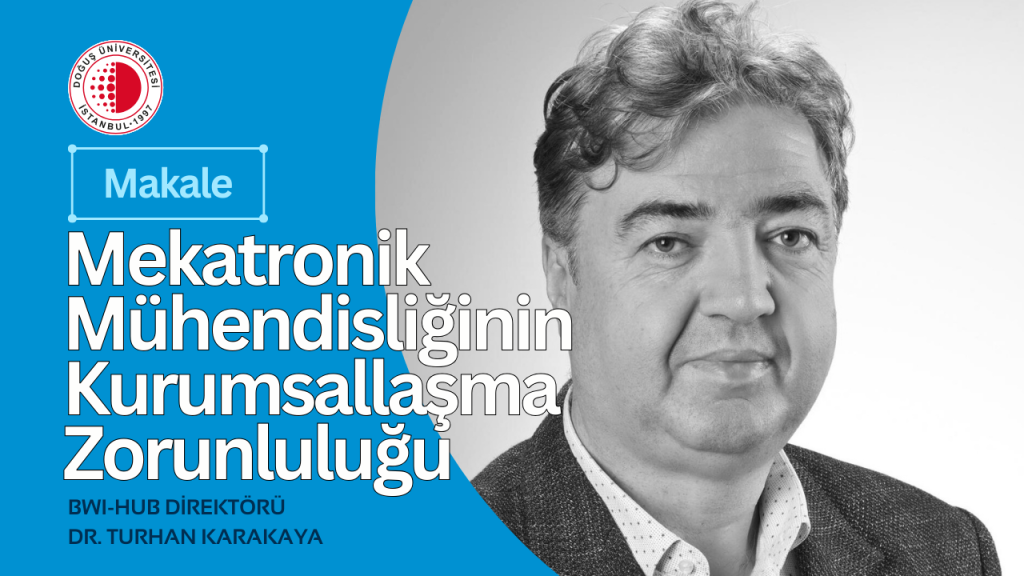
Dr. Turhan KARAKAYA, Director of the Business World and Innovation Center (BWI-Hub) at Doğuş University, has expressed his views on the establishment of the Chamber of Mechatronics Engineers as follows:
The Necessity of Institutionalizing the Discipline of Mechatronics Engineering in Türkiye: Global Perspectives, Technical Justifications, and a Proposal for a Sustainable Roadmap
One of the most significant achievements of the Turkish engineering community throughout its historical development has been the institutionalization of professional organization under a strong and well-established umbrella within the Union of Chambers of Turkish Engineers and Architects (TMMOB). The chambers operating under this umbrella have, for decades, fulfilled vital functions such as safeguarding professional ethics, protecting the public interest, and elevating professional standards with a strong sense of responsibility. In this context, the Chamber of Mechanical Engineers (MMO) is widely respected for its critical role in the development of the mechanical engineering discipline that forms the backbone of our industry, for its tangible contributions to national development, and for its steadfast stance in defending the rights of its members. The MMO’s efforts in standard-setting, education, supervision, and public awareness constitute a valuable legacy embedded in the collective memory of Turkish engineering. This legacy serves as the fundamental reference point and a reliable foundation for any constructive discussion regarding the future of mechatronics engineering. From this standpoint, it should be clearly emphasized that the objective is not to undermine existing valuable structures, but rather to strengthen and complement them in order to respond to the new requirements imposed by technological transformation.
Technological evolution is fundamentally reshaping the nature of engineering practice and the traditional boundaries between disciplines. The concept of mechatronics represents a paradigm at the center of this transformation, requiring the simultaneous and synergistic integration of mechanical engineering, electrical and electronics engineering, control engineering, and computer science. Today, the successful design and operation of complex systems such as advanced manufacturing systems, autonomous vehicles, robotic surgical devices, and smart infrastructures can no longer be achieved through the knowledge base of any single discipline alone. Instead, mechanical configuration, sensor and actuator selection, data processing algorithms, and real-time control strategies must be addressed as an integrated whole from the very beginning of the design process. Recognizing this global reality, Türkiye demonstrated early adaptation in its education policies by establishing undergraduate Mechatronics Engineering programs at more than sixty universities. These programs graduate approximately three thousand students annually, and the total number of graduates is estimated to be approaching forty thousand. This broad and qualified human resource holds strategic importance for the country’s goals of high value-added production and technological independence. However, the situation these engineers face in terms of professional organization presents a picture that is incompatible with their potential. Under the current regulatory framework, the vast majority of graduates are compelled to register with the TMMOB Chamber of Mechanical Engineers in a manner that does not fully reflect their area of expertise. This issue goes beyond a simple matter of administrative classification and gives rise to profound problems related to professional identity, recognition of technical competence, determination of legal responsibility boundaries, and international competitiveness.
Evaluating these challenges within a global context can shed light on the most appropriate model for Türkiye. Advanced industrial economies have recognized the importance of mechatronics and have integrated it into their professional structures in various ways. In the case of Germany, the profession of “Mechatroniker” has been officially recognized at the federal level, with defined education and certification standards that have become an integral part of the German industry’s quality culture. At the engineering level, organizations such as the VDI (Association of German Engineers) play an active role not only in professional development but also in the creation of thousands of technical standards, thereby establishing a strong link between professional practice and industrial norms. The model adopted in Australia and New Zealand, on the other hand, is based on a competency-based licensing system. The status of “Chartered Professional Engineer” requires post-graduation experience, demonstrated ability to solve complex engineering problems, and continuous professional development activities. Within this system, mechatronics is recognized as a strong field of specialization, and this status forms the legal basis for signing authority, particularly in projects related to public safety. This approach places evidence-based competency assessment at its core, beyond formal education alone. The practice in the United Kingdom provides an example of how specialization branches can be effectively structured within established engineering institutions. The “Mechatronics, Informatics and Control Group” within the Institution of Mechanical Engineers (IMechE) demonstrates how a specific area of expertise can be organized and developed under a primary disciplinary umbrella. In contrast, the model in the United States warrants careful examination. In the U.S., the “Professional Engineer” license is generally granted for traditional engineering disciplines, while mechatronics often remains a postgraduate specialization. This structure can lead to situations where engineers from different disciplines exercise signing authority over different components of an integrated system, without a single professional authority responsible for the system’s holistic integration and safety. Such a “fragmentation of responsibility” can constitute a potential safety vulnerability for high-risk critical systems.
Although Türkiye’s current situation does not yet exhibit fragmentation as pronounced as that of the United States, it nonetheless contains similar risks. The deep expertise of the Chamber of Mechanical Engineers in mechanical systems and that of the Chamber of Electrical Engineers in electrical and electronic systems is indisputable. However, the safety and efficiency of an automation line, a robotic system, or a cyber-physical system depend not solely on the correctness of mechanical or electrical design, but on the seamless integration of these components with software and control algorithms. At this point, the need becomes inevitable for a professional institution that will assume professional and legal responsibility for the system’s overall behavior, performance, and safety, and that embodies this triple competency—mechanical, electronic, and software/control—within its structure. The establishment of an independent Chamber of Mechatronics Engineers would fill this critical gap and centralize an authority for “system integration and integrated supervision” that complements the valuable areas of expertise of the MMO and the Chamber of Electrical Engineers. This approach would not only alleviate the burden on existing chambers but would also enable them to further deepen their work within their core disciplines, creating a synergistic model of division of labor and cooperation.
The benefits of establishing an independent chamber are multidimensional. First, the legal definition of the duties, authorities, and responsibilities of the “Mechatronics Engineer” profession would put an end to the erosion of professional identity and ensure clear recognition at both national and international levels. Second, and most critically, it would ensure public safety. The chamber would establish an integrated project approval and supervision mechanism for complex systems where mechanical, electronic, and software components are intertwined, thereby minimizing risks arising from fragmented responsibility. Third, it would assume a standard-setting role in education and certification. Accreditation of university programs would guarantee graduate quality, while specialization certificates in areas such as “Industrial Robotics” and “Intelligent Systems Integration” would document the qualified workforce required by industry. Fourth, it would facilitate international integration. A chamber with its own institutional identity would be able to establish direct relations with global organizations such as FEANI and IEEE, increasing the international mobility and recognition of Turkish engineers. Fifth, it would centralize sectoral representation and advocacy power. Tens of thousands of engineers, currently dispersed, would gain the ability to advocate with a single and strong voice on issues of professional rights, working standards, and sectoral policies.
However, the path to these benefits involves significant challenges and responsibilities. The most prominent challenge in the process is the cautious stance that may arise from existing chambers. At this point, the guiding principle of the dialogue should be framed not in terms of “competition,” but of “complementarity” and “sharing in a growing pie.” A second challenge lies in building the financial and institutional infrastructure from scratch. A third challenge is the need to prepare regulations—such as professional standards, ethical codes, and particularly the technically complex regulation governing signing authority—with broad participation and meticulous care. Alongside these challenges, establishing a chamber also entails substantial responsibilities. Ensuring that professional activities comply with ethical and technical standards, safeguarding the public interest under all circumstances, providing continuous education opportunities in light of technological developments, and effectively defending the professional rights of members will be among the fundamental obligations of the new chamber.
To achieve these goals, a gradual, dialogue-based, and strategic roadmap should be followed. The first stage is to establish consensus and create a data-driven argumentative foundation. An initiative composed of academics, industry representatives, and senior engineers should prepare comprehensive reports addressing the economic importance of mechatronics, an analysis of the gap in signing authority, and a detailed evaluation of global models. The second, concrete step is to work toward the establishment of a much stronger and fully autonomous “Mechatronics Engineers Commission” within the MMO. This commission should have its own budget and decision-making authority, and should undertake tasks such as curriculum evaluation, organization of continuing professional education, and preparation of a draft regulation on signing authority. Serving as a transitional mechanism, this structure would both organize the mechatronics community and keep dialogue channels open. The third and final stage would be to submit a proposal to the TMMOB General Assembly for the establishment of an independent chamber once this commission effectively functions as a core chamber and sufficient member support and institutional maturity have been achieved.
In conclusion, Türkiye’s technology-oriented development vision can only be realized in an environment where qualified human resources are properly organized and endowed with an institutional identity. Mechatronics engineering is a strategic discipline at the heart of this vision. The establishment of an independent Chamber of Mechatronics Engineers represents not merely a professional demand, but a strategic initiative that will also address national priorities such as ensuring public safety, enhancing industrial competitiveness, and positioning Türkiye where it rightfully belongs in the global technology arena. This process will stand as a testament to the collective intelligence, vision, and adaptive capacity of the Turkish engineering community. The deep institutional experience possessed by our existing chambers constitutes the strongest foundation for this transformation. Now is the time to invite all stakeholders to a constructive, rational, and forward-looking dialogue process, and to demonstrate the will to take the first concrete step by establishing a much stronger Mechatronics Engineers Commission within the MMO.
Dr. Turhan KARAKAYA
Mechatronics Engineer, Mechanical Engineer,
Industrial Engineer, Business Professional (Ph.D. & MBA)
We would like to express our sincere thanks to Dr. Turhan KARAKAYA, Director of the Business World and Innovation Center (BWI-Hub) at Doğuş University, General Manager of Project Istanbul, and Board Member of MEKMÜHDER, for his valuable opinions and insights.