

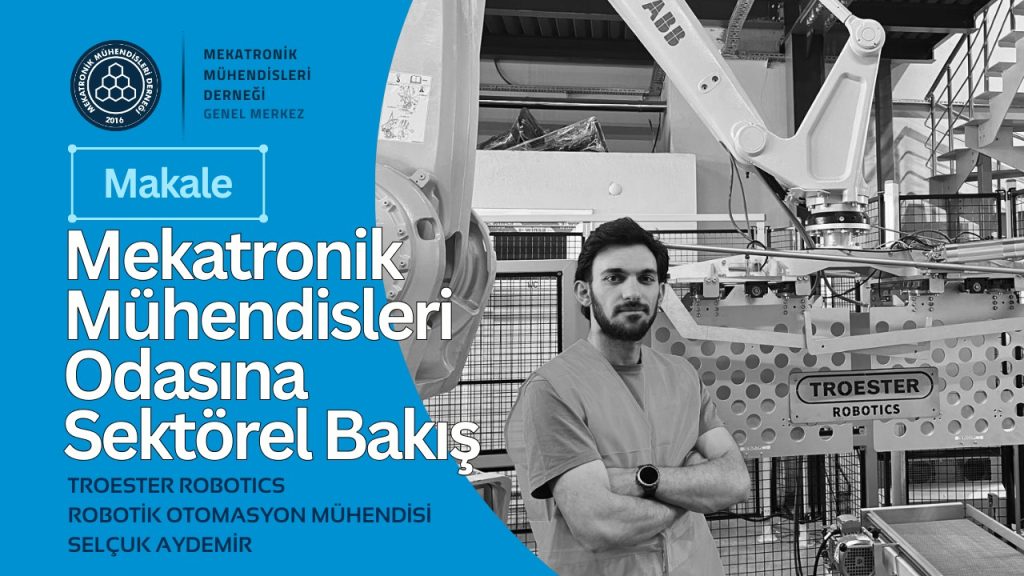
Mekatronik Mühendisleri Derneği Yönetim Kurulu Üyesi Selçuk AYDEMİR, Mekatronik Mühendisleri Odası’nın kurulması hakkındaki görüşlerini şu şekilde dile getirmiştir:
Mekatronik Mühendisleri Odası: Mesleki Bir Değerlendirme
Mekatronik mühendisliği; makine, elektrik-elektronik, yazılım ve otomasyon disiplinlerini bir araya getiren, günümüz sanayisinin temel yapı taşlarından biri haline gelmiş bir mühendislik alanıdır. Özellikle otomasyon, robotik ve özel makine uygulamalarında mekatronik mühendislerinin rolü her geçen gün daha da belirginleşmektedir.
Uygulama ve proje süreçlerinde aktif olarak görev alan bir mekatronik mühendisi olarak, mesleğin teknik karşılığının güçlü olduğunu ancak kurumsal temsil noktasında önemli bir eksiklik bulunduğunu gözlemliyorum.
Mesleki Temsil ve Yapısal Eksiklik
Projelerde mekatronik mühendisi, çoğu zaman sistemin bütününden sorumlu olan kişidir. Mekanik uyum, elektriksel altyapı, kontrol sistemleri ve yazılım katmanları tek bir yapının parçaları olarak ele alınır. Bu bütüncül yaklaşım, mekatronik mühendisliğinin en ayırt edici özelliğidir.
Ancak bu netlik, mesleki tanım ve yetki alanları söz konusu olduğunda aynı şekilde karşılık bulamamaktadır. Mekatronik mühendisleri, mesleki temsil açısından çoğu zaman farklı mühendislik odaları altında değerlendirilmektedir. Bu durum, mesleğin sınırlarının ve sorumluluk alanlarının belirsizleşmesine neden olmaktadır.
Türkiye’de mekatronik mühendisliği eğitimi uzun süredir verilmektedir ve mezun sayısı her yıl artmaktadır. Endüstriyel uygulamalarda karşılığı net olan bu mesleğin, bağımsız bir meslek odasına sahip olmaması önemli bir yapısal eksikliktir.
Bu eksiklik yalnızca mesleki bir başlık olarak değil; yetki, sorumluluk, imza ve meslek tanımı gibi konularda da doğrudan etkisini göstermektedir. Uygulama pratiğinde aktif olarak görev alan mekatronik mühendisleri, kurumsal çerçeve eksikliği nedeniyle mesleklerini tanımlamak zorunda kalmaktadır.
Endüstri 4.0, dijitalleşme ve akıllı üretim kavramları, disiplinlerarası mühendislik yaklaşımını zorunlu kılmaktadır. Bu dönüşümün merkezinde yer alan mesleklerden biri açıkça mekatronik mühendisliğidir.
Robotik sistemler, otomasyon hatları, esnek üretim yapıları ve veri odaklı kontrol sistemleri; mekatronik mühendislerinin uzmanlık alanı içerisinde yer almaktadır. Bu nedenle mesleğin, yalnızca teknik değil, kurumsal olarak da bu dönüşüme uygun bir yapıya kavuşması gerekmektedir.
Mekatronik Mühendisleri Odası’nın Önemi
Mekatronik Mühendisleri Odası’nın kurulması, mesleğin doğru tanımlanması ve kurumsal olarak güçlendirilmesi açısından önemli bir ihtiyaçtır. Disiplinler arası yapısı nedeniyle mekatronik mühendisliği, yetki ve sorumluluk alanları netleştirilmediğinde uygulama süreçlerinde belirsizliklere yol açmaktadır.
Bu oda, mekatronik mühendisliğinin yetki, sorumluluk ve mesleki sınırlarını belirleyerek görev karmaşasını azaltacaktır. Aynı zamanda mesleki standartların oluşturulması, uzmanlık alanlarının tanımlanması ve sürekli mesleki gelişimin desteklenmesi açısından düzenleyici bir rol üstlenecektir.
Genç mekatronik mühendisleri için yol gösterici bir yapı oluşturulurken; sanayi, akademi ve kamu arasında mekatronik mühendisliğinin doğrudan temsil edilmesi sağlanacaktır. Mekatronik Mühendisleri Odası, ayrıştırıcı değil; mesleği daha sağlıklı ve sürdürülebilir bir zemine oturtan bir yapı olacaktır.
Mekatronik mühendisliği bugün sanayide güçlü bir şekilde var olmasına rağmen, kurumsal temsil açısından aynı noktada değildir. Mühendislik pratiğinde üstlenilen sorumluluklar ile mesleki tanım arasındaki bu fark, zamanla daha belirgin hale gelmektedir.
Mekatronik Mühendisleri Odası, bu farkın giderilmesi adına atılması gereken doğal ve gecikmiş bir adımdır. Bu adımın atılması, yalnızca mekatronik mühendisleri için değil, Türkiye’nin sanayi ve teknoloji hedefleri açısından da önemli bir kazanım olacaktır.
Selçuk AYDEMİR
Mekatronik Mühendisi
MMD Yönetim Kurulu Üyesi
Değerli görüş ve fikirleri için Mekatronik Mühendisleri Derneği Yönetim Kurulu Üyesi Selçuk AYDEMİR Bey’e teşekkür ederiz.
Selçuk AYDEMİR, Member of the Board of Directors of the Mechatronics Engineers Association, expressed his views on the establishment of the Chamber of Mechatronics Engineers as follows:
The Chamber of Mechatronics Engineers: A Professional Assessment
Mechatronics engineering is an engineering discipline that brings together mechanical, electrical-electronics, software, and automation fields and has become one of the fundamental building blocks of modern industry. Especially in automation, robotics, and special-purpose machinery applications, the role of mechatronics engineers is becoming increasingly prominent day by day.
As a mechatronics engineer who actively takes part in implementation and project processes, I observe that while the technical foundation of the profession is strong, there is a significant deficiency in terms of institutional representation.
Professional Representation and Structural Deficiency
In projects, the mechatronics engineer is often the person responsible for the system as a whole. Mechanical compatibility, electrical infrastructure, control systems, and software layers are handled as components of a single structure. This holistic approach is the most distinctive characteristic of mechatronics engineering.
However, this clarity does not find the same reflection when it comes to professional definitions and scopes of authority. Mechatronics engineers are often evaluated under different engineering chambers in terms of professional representation. This situation leads to ambiguity in the boundaries and areas of responsibility of the profession.
In Türkiye, mechatronics engineering education has been provided for a long time, and the number of graduates increases every year. The fact that a profession with a clear role in industrial applications does not have an independent professional chamber constitutes a significant structural deficiency.
This deficiency manifests itself not only as a professional title issue but also directly affects matters such as authority, responsibility, signing rights, and professional definition. Mechatronics engineers who actively take part in practical applications are forced to define and justify their profession due to the lack of an institutional framework.
Industry 4.0, digitalization, and smart manufacturing concepts necessitate an interdisciplinary engineering approach. One of the professions clearly positioned at the center of this transformation is mechatronics engineering.
Robotic systems, automation lines, flexible manufacturing structures, and data-driven control systems fall within the expertise of mechatronics engineers. For this reason, the profession must acquire a structure that is compatible with this transformation not only technically but also institutionally.
The Importance of the Chamber of Mechatronics Engineers
The establishment of the Chamber of Mechatronics Engineers is an important necessity for the accurate definition and institutional strengthening of the profession. Due to its interdisciplinary nature, when authority and responsibility areas are not clearly defined, mechatronics engineering leads to uncertainties in implementation processes.
By defining the authorities, responsibilities, and professional boundaries of mechatronics engineering, this chamber will reduce role confusion. At the same time, it will assume a regulatory role in establishing professional standards, defining areas of specialization, and supporting continuous professional development.
While creating a guiding structure for young mechatronics engineers, direct representation of mechatronics engineering between industry, academia, and the public sector will be ensured. The Chamber of Mechatronics Engineers will not be a divisive body; rather, it will be a structure that places the profession on a healthier and more sustainable foundation.
Although mechatronics engineering has a strong presence in industry today, it does not occupy the same position in terms of institutional representation. This gap between the responsibilities undertaken in engineering practice and the professional definition becomes more pronounced over time.
The Chamber of Mechatronics Engineers is a natural and long-overdue step that must be taken to eliminate this gap. Taking this step will be a significant gain not only for mechatronics engineers but also for Türkiye’s industrial and technological objectives.
Selçuk AYDEMİR
Mechatronics Engineer
Member of the Board of Directors, Mechatronics Engineers Association
We would like to thank Mr. Selçuk AYDEMİR, Member of the Board of Directors of the Mechatronics Engineers Association, for his valuable views and insights.