

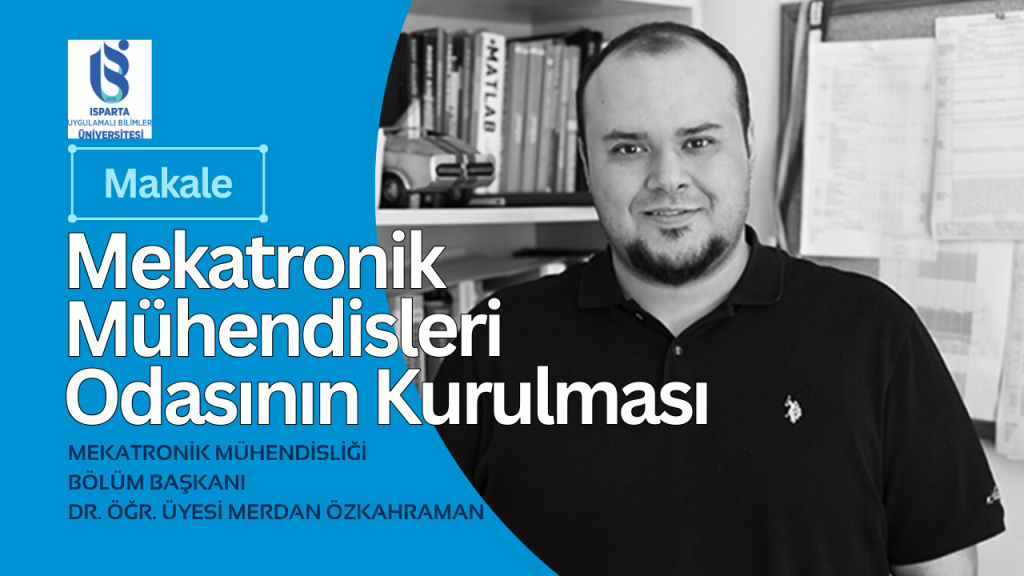
Isparta Uygulamalı Bilimler Üniversitesi, Mekatronik Mühendisliği Bölüm Başkanı Dr. Öğr. Üyesi Merdan ÖZKAHRAMAN, Mekatronik Mühendisleri Odası’nın kurulması hakkındaki görüşlerini şu şekilde dile getirmiştir:
Mekatronik Mühendisliği ve Mesleki Temsilin Gerekliliği Üzerine
Mekatronik mühendisliği, modern mühendislik sistemlerinin doğrudan gerektirdiği bütüncül tasarım ve analiz yaklaşımının bir sonucudur. Günümüzde geliştirilen endüstriyel sistemler; mekanik yapı, elektronik donanım, kontrol algoritmaları ve yazılım bileşenlerinin eş zamanlı ve uyumlu biçimde ele alınmasını zorunlu kılmaktadır. Bu gereklilik, mekatronik mühendisliğini uygulama alanı net, teknik içeriği tanımlı ve sistem yaklaşımı güçlü bir mühendislik disiplini haline getirmiştir.
Endüstriyel robotlar, otonom sistemler, akıllı üretim hatları ve gömülü kontrol sistemleri gibi uygulamalarda temel sorun, tekil alt bileşenlerin tasarımından ziyade bu bileşenlerin sistem seviyesinde entegrasyonudur. Mekatronik mühendisliği, bu entegrasyonu merkezine alan bir mühendislik anlayışı sunar. Bu yaklaşım, teorik bilginin sahadaki gerçek sistemlerle tutarlı şekilde buluşmasını sağlar ve mühendislik çözümlerinin sürdürülebilirliğini artırır.
Sanayi tarafında yaşanan dönüşüm, mühendislik yetkinliklerinin de yeniden tanımlanmasını beraberinde getirmiştir. Esnek üretim sistemleri, robotik otomasyon, gerçek zamanlı kontrol ve veri temelli karar mekanizmaları; tasarım, uygulama ve işletme aşamalarında sistem düzeyinde düşünebilen mühendislik profillerine ihtiyaç doğurmaktadır. Mekatronik mühendisleri, bu ihtiyaca doğrudan karşılık veren bir teknik donanıma sahiptir. Bu teknik gerçekliğe rağmen, mekatronik mühendisliğinin mesleki temsiliyetinin kurumsal bir yapı ile desteklenmemiş olması önemli bir eksikliktir. Türkiye’de birçok mühendislik alanı, meslek odaları aracılığıyla meslek tanımlarını, yetkinlik çerçevelerini ve uygulama standartlarını net biçimde ortaya koyabilmektedir. Bu yapılar, mesleki gelişimin sürekliliği ve kamusal görünürlük açısından belirleyici bir rol oynamaktadır.
Mekatronik mühendisliğinde ise meslek alanı fiilen var olmasına rağmen, bu alanı temsil eden bir oda yapısının bulunmaması; mesleki sınırların belirsizleşmesine, yetkinliklerin farklı disiplinler arasında dağınık biçimde algılanmasına ve uygulamada tutarsızlıklara yol açmaktadır. Bu durum, mesleğin kendisinden değil, temsil eksikliğinden kaynaklanmaktadır.
Meslek odalarının bir diğer önemli işlevi, mühendislik alanlarının toplum nezdinde tanınabilirliğini artırmasıdır. Bu etki, özellikle ÖSYM tercih dönemlerinde daha belirgin hale gelmektedir. Bir mühendislik bölümünün meslek odasıyla temsil edilmesi, aday öğrenciler açısından o alanın mesleki karşılığının, sürekliliğinin ve kurumsal zemininin somut bir göstergesi olarak algılanmaktadır. Mekatronik mühendisliğinin bu yapıya sahip olmaması, bölümün teknik içeriği ile sahadaki gerçek karşılığı arasındaki ilişkinin yeterince görünür olmamasına neden olmaktadır. Oysa mekatronik mühendisliği, mezunlarının sanayide üstlendiği roller, Ar-Ge faaliyetlerindeki etkinliği ve akademik üretimiyle güçlü bir mesleki karşılığa sahiptir. Bu karşılığın kurumsal bir yapı ile desteklenmesi, hem mevcut mühendislerin mesleki konumunu güçlendirecek hem de gelecekte bu alana yönelmek isteyen nitelikli öğrenciler için daha net bir çerçeve sunacaktır.
Mekatronik Mühendisleri Odasının kurulması, mesleğin teknik sınırlarını belirleyen, uygulama standartlarını tanımlayan ve mesleki gelişimi yönlendiren bir yapı oluşturacaktır. Bu yapı, akademi, sanayi ve kamu arasındaki etkileşimi daha sistematik hale getirecek; mekatronik mühendisliğinin mühendislik ekosistemi içindeki yerini daha doğru biçimde konumlandıracaktır. Sonuç olarak mekatronik mühendisliği, güncel mühendislik problemlerinin doğrudan gerektirdiği bir uzmanlık alanıdır. Bu alanın kurumsal olarak temsil edilmesi, bir tercih değil; teknik gelişmelerin doğal bir sonucudur. Mekatronik Mühendisleri Odasının kurulması, mesleğin bugünkü uygulama gerçekliği ile kurumsal yapısı arasındaki uyumsuzluğu giderecek gerekli ve gecikmiş bir adımdır.
Dr. Öğr. Üyesi Merdan ÖZKAHRAMANMekatronik Mühendisliği Bölüm Başkanı
Isparta Uygulamalı Bilimler Üniversitesi
Değerli görüş ve fikirleri için Isparta Uygulamalı Bilimler Üniversitesi, Mekatronik Mühendisliği Bölüm Başkanı Dr. Öğr. Üyesi Merdan ÖZKAHRAMAN hocamıza teşekkür ederiz.
Dr. Merdan ÖZKAHRAMAN, Head of the Department of Mechatronics Engineering at Isparta University of Applied Sciences, has expressed his views on the establishment of the Chamber of Mechatronics Engineers as follows:
On Mechatronics Engineering and the Necessity of Professional Representation
Mechatronics engineering is the result of a holistic design and analysis approach directly required by modern engineering systems. Contemporary industrial systems necessitate the simultaneous and harmonious consideration of mechanical structures, electronic hardware, control algorithms, and software components. This requirement has positioned mechatronics engineering as an engineering discipline with a clearly defined field of application, well-structured technical content, and a strong systems-based approach.
In applications such as industrial robots, autonomous systems, intelligent production lines, and embedded control systems, the primary challenge lies not in the design of individual subcomponents, but in their integration at the system level. Mechatronics engineering offers an engineering perspective that places this integration at its core. This approach ensures that theoretical knowledge aligns consistently with real-world systems in practice and enhances the sustainability of engineering solutions.
The transformation occurring in the industrial sector has also led to a redefinition of engineering competencies. Flexible manufacturing systems, robotic automation, real-time control, and data-driven decision-making mechanisms require engineering profiles capable of system-level thinking throughout the design, implementation, and operation phases. Mechatronics engineers possess the technical qualifications that directly address this need. Despite this technical reality, the lack of institutional support for the professional representation of mechatronics engineering constitutes a significant shortcoming. In Türkiye, many engineering disciplines are able to clearly define their professional scope, competency frameworks, and application standards through professional chambers. These structures play a decisive role in ensuring the continuity of professional development and public visibility.
In mechatronics engineering, however, although the professional field exists in practice, the absence of a dedicated chamber representing this field leads to the blurring of professional boundaries, fragmented perceptions of competencies across different disciplines, and inconsistencies in practice. This situation does not stem from the profession itself, but from the lack of representation.
Another important function of professional chambers is to enhance the recognizability of engineering disciplines in the eyes of society. This impact becomes particularly evident during the ÖSYM university preference periods. Representation of an engineering department through a professional chamber is perceived by prospective students as a concrete indicator of that field’s professional relevance, continuity, and institutional foundation. The absence of such a structure for mechatronics engineering causes the relationship between the department’s technical content and its real-world professional counterpart to remain insufficiently visible. However, mechatronics engineering has a strong professional foundation, as evidenced by the roles its graduates undertake in industry, their effectiveness in R&D activities, and their academic output. Supporting this foundation with an institutional structure would both strengthen the professional standing of current engineers and provide a clearer framework for qualified students who wish to pursue this field in the future.
The establishment of the Chamber of Mechatronics Engineers would create a structure that defines the technical boundaries of the profession, sets application standards, and guides professional development. Such a structure would make the interaction between academia, industry, and the public sector more systematic, and would position mechatronics engineering more accurately within the engineering ecosystem. In conclusion, mechatronics engineering is a field of expertise directly required by contemporary engineering problems. Its institutional representation is not a matter of preference, but a natural outcome of technical progress. The establishment of the Chamber of Mechatronics Engineers is a necessary and long-overdue step that will eliminate the mismatch between the profession’s current practical reality and its institutional structure.
Dr. Merdan ÖZKAHRAMAN
Head of the Department of Mechatronics Engineering
Isparta University of Applied Sciences
We would like to express our sincere thanks to Dr. Merdan ÖZKAHRAMAN, Head of the Department of Mechatronics Engineering at Isparta University of Applied Sciences, for his valuable opinions and insights.